
This IS your father’s Perennialism — your dad was just a lot cooler than you realized.
About five or six years ago, while mucking my way through a creative rut and trying to finish the rewrite of my first novel, I had an epiphany that would be a forever game-changer: I was, and always had been, a student of the Perennial Philosophy first and a pantheist second. The cart had been pulling the horse since early 2014 when I took a deep dive into Spinoza and religious naturalism, and the years that followed brought an earnest but ultimately fruitless effort to deify non-dual logic itself, without fully acknowledging what had brought me to his qualified monism years prior. It wasn’t pantheism — it was the work of social scientist and novelist Aldous Huxley toward an interdisciplinary understanding of the “unitive knowledge” sought by mystics of all stripes, including many pantheists. The pursuit of unitive knowledge had been the method, and pantheism the conclusion.
This mattered because one of the hallmarks of Perennialist spirituality is the ability to find common cause with people who don’t come to the same conclusion, but whose methods are in accord with each other and lead to a unitary place called by different names. As soon as I re-hitched my cart to Perennialism, I stopped arguing with theists and atheists on social media, and went back to seeking the common cause in our conversations. Perennialism, in other words, retaught me to love my neighbor as myself. (This commandment from the Judeo-Christian tradition originates from and brings our attention to the same interior space as the Vedantic mantra “Thou art That.”)
But what is this relatively unknown term that seems to come in and go out of theological vogue? Maybe you’ve seen the term “Perennialism” and wondered why people worship plants that grow back every spring. Or certainly you’ve read some of the adages of pop philosophy that are often identified as Perennialist: “all religions teach the same thing,” “no religion has the *yawn* whole truth but they all have part of the truth,” etc. Or maybe you’ve had an introduction to Perennialism but were turned off by the reactionary politics and anti-modernism of the René Guénons and Julius Evolas of the past and Steve Bannons and Aleksandr Dugins of the present.
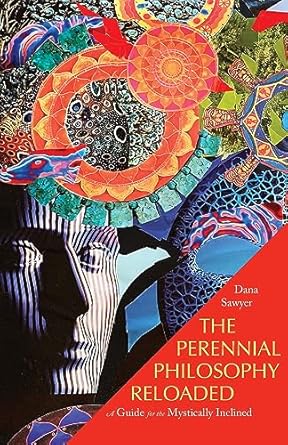
If so, I would love to introduce you to a meatier and much less fashy understanding of Perennialism through this outstanding piece by David Armstrong, in which he reviews a new book titled “The Perennial Philosophy Reloaded: A Guide for the Mystically Inclined,” by Dana Sawyer. This volume seems to describe exactly what I am, with nuances and particulars that picked up where Huxley left off. According to Armstrong, Sawyer asserts that the form of Perennialism espoused through the mid-20th century by Huxley, Houston Smith, Alan Watts, Carl Jung, and Joseph Campbell, “rather than being a ‘new’ form of perennialism…is what the classic perennialists themselves had in mind.”
Here are some highlights from Armstrong’s review:
“Perennialism is a minimal working hypothesis—a lowest common denominator (or “highest common factor” in Huxley’s work) of philosophical/mystical intuition that recurs across religious and philosophical divides…Rebutting the critique that perennialism…is in fact a bland kind of “all religions teach the same ideas” way to spiritually bypass the tough incongruities between religious systems and cultures, Sawyer argues that perennialism concerns itself with what Huxley called “the minimal working hypothesis”
There are “four principles constitutive of the minimal working hypothesis…: first, “THAT there is a transcendent foundation of all reality…existing beyond the physical world of time and space,” “THAT this Ground of Being is transcendent to the world of time and space but also is manifest as the world of time and space,” “THAT it is possible for human beings not only to understand theories about this configuration of reality, but, via the ‘unitive knowledge’…to experience it,” and “THAT achieving this spiritual awakening of our oneness with Ultimate Reality not only brings meaning and purpose to our lives, via a richer perspective on our circumstances in the world, but an awakening of our responsibilities towards others”
Rather than doctrine, Perennialism centers “what Huxley termed the ‘unitive knowledge,’ which was the sense that they had merged into a oneness with God/Nature/the Sacred or Ultimate Reality. Huxley also noted that despite the fact that the unitive mystical experience (UME) was then weighed and evaluated variously inside the different religious traditions, the mystics themselves valued it.”
“One of Sawyer’s signature points in the book: perennialism is not a single philosophy, but a “family of philosophies,” related to other families by genealogy and intentional intermarriage, in which not every thinker’s views must be owned by the would-be perennialist…the perennial philosophy shares something in common with Hinduism, Buddhism, Kabbala, and Greek mystical traditions in that when we deal with the root of our problem as a species, it’s not that we’re fundamentally flawed but that our flawed actions are the by-products of our wrong understanding of who we really are”
“The perennial philosophy…in most of its iterations, never contradicts scientific facts (though it may refute certain theories), and so it is in agreement that we are on a planet two-thirds of the way out from the center of the spiral galaxy we call the Milky Way—in a universe that is not only large but perhaps multi-dimensional.” But perennialism does insist on grounding the physical world describable by the material sciences in the metaphysical world of the Absolute, Brahman, which is the selfsame identical, ubiquitous Ground of Being as the absolute aspect of our Selves.
“Perennialists are inherently nondualists. They are also, to the selfsame degree, idealists and panpsychists in different varieties. [And, though Armstrong avoids the term while embracing most of its particularities, I will add “pantheists” or “pandeists” as well.] This leads to a variety of concepts among perennialists of the value, perdurance, or immortality of the relative aspect of the self in some form—whether, in other words, our personal consciousness survives death in some way and if so in what way—but these ideas of the Unity of Being, Universal Consciousness, and Universal Life are common to all of them.”
“‘The physical world is a variegated manifestation of a singular phenomenon.’ The trick here is not to reify dualism in reaching the nondual perspective: ‘Both levels of reality—physical and metaphysical—are equally ‘Brahman.’ Likewise, Perennialists describe reality as a oneness in which its physical and metaphysical aspects are not separate. Even our bodies are not truly separate from the deepest level of our being, but rather the most manifest or concrete aspect of what we are, the bleeding edge of our spirit.’ This is how we also conclude that, as beings in the metaphysical and physical worlds, “the root of our being [Atman] is non-different from the Ground or root of ALL being”
 Noesta Aqui