
His given name was Salman Hennessy O’Toole, and he was born in 1933 in Liverpool to a Jewish mother and converted Irish father. He was but a wee lad of seven when the O’Tooles escaped England just ahead of the Nazi bombing campaigns and settled in Fairfax, a historically Jewish neighborhood of Los Angeles. “He had been a California beatnik in the 50s and flower child in the 60s,” according to the text, “a painter, a carpenter, a metalsmith, an aikido master, and an avid mountaineer, in addition to being an all-around bon vivant of the LA music scene.”
The weird thing is, I didn’t even know he existed until roughly a year ago. Angry Youth, the Zen punk provocateurs that he would champion and make almost famous, had been banging around in my head since the early 1990s, just a faint seed of a story without a tale in which to tell it. Once the great vehicle of UNLESS was revived, and a couple drafts were written with the band taking center stage at a critical time, I knew something was missing. Their rise from garage band obscurity to the brink of punk zeitgeist status was a little too fairy tale for the role it plays in the book. They needed a starmaker.
“That was the other name I kept hearing that first summer, Sludge. You wanna kill it as a punk band in Hollywood? Go find Sludge. So naturally I’m expecting to venture out into the forest to meet this big mean crusty punk ogre, right? Well, I found out they call him Sludge because of all the damn Turkish coffee he drinks nonstop. [laughs] Second-hand Brooks Brothers shirts and corduroys and Donegal tweed scally cap, all from the finest Goodwill stores in LA. Little guy like me, but wiry-strong, tough as nails. And the reason it took so long to find him, it turned out, was because he was taking a long break from the scene because he was tired of the violence.” – Stevie Washington, lead singer/songwriter of Angry Youth
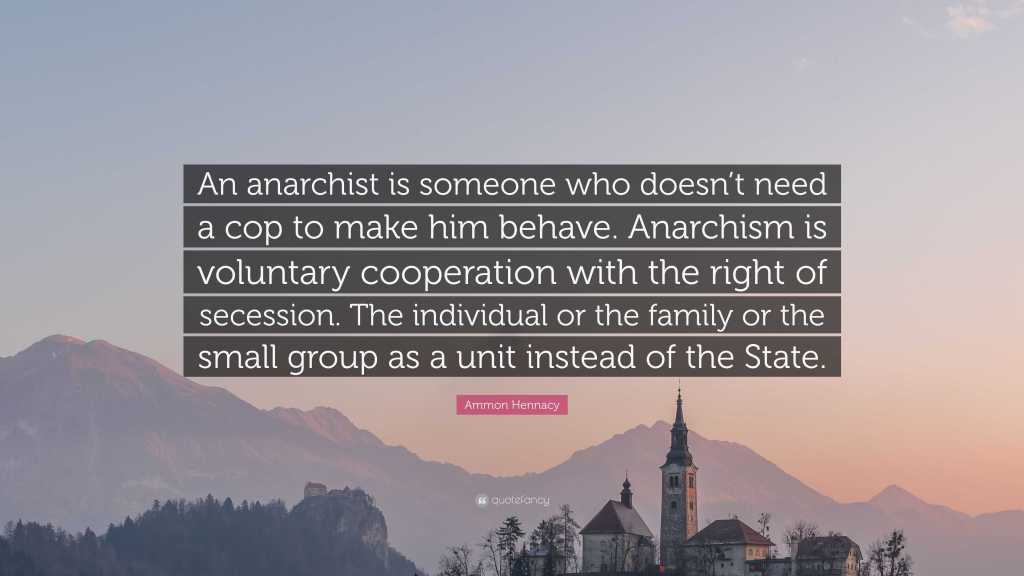
The first part of his name is a tribute to Ammon Hennecy, and if you know anything about this “one-man revolution in America*,” you’ll know more than half of the inspiration for “Sludge.” (His nickname and the Turkish coffee reference are a nod to one of my favorite scenes in my all-time favorite movie, “The Birdcage.”) Though the character is no match for Hennecy’s real-life activist credentials and socialist bonafides, nor was he raised Quaker or baptized into the Catholic Church as Dorothy Day’s godson (Hennecy disavowed the institutional church, as do many Catholic Workers), the heart that drives them and the philosophy that guides them are the same. I can speak with confidence on the matter because Sludge is, more or less, me — that is, he, shortcomings and all, represents my present-day influence on my own book about events from the long-ago past. He is the mentor that I’ve had to be for myself while my wordsmith nature daydreams the story into existence. He is the secular patron saint of every independent author who has been compelled to write while working, in the world but not quite of it, to support a family and promote their own work as a one-person DIY writer-publisher in late stage capitalist America.
*Here’s a clip of a radio interview where Hennecy talks about the Joe Hill House of Hospitality in Salt Lake City, and a tribute by the folk singer & labor agitator Utah Phillips to his mentor.
“I was all done with punk, I really was. I was fresh on the wrong side of 50 and my hair was already blinding white — what did I have to offer some failed-to-launch, rusty adolescents who are all amp and no instrument?” —Sludge O’Toole
It is no coincidence that Sludge had just turned 51 when he first met the band in 1984 — the same age I am now (for another two days anyway). And if you notice that the voice of Estelle’s ally-antagonist in the second part of “UNLESS” is very similar to Sludge’s, that is also not a coincidence. Essentially, they are parallel admissions that neither the 18-year-old main character nor the 22-year-old author had sufficient life experience to tell this story properly when it was first tried in 1994. Estelle needed inner guidance that could be explained as anything from a small time warp of prescient insight to a major angelic visitation from her wiser future, while I simply needed to let the story simmer for thirty years while gathering all the ingredients.
One of those ingredients, perhaps the main one, was what I call spiritual or “inward” anarchism. This is a general term for any set of practices that direct the principles of anarchism on a trajectory toward inner transformation that mirrors the political changes we seek through outward action. It is complementary to its outward counterpart, not in competition with it.
“Spiritual anarchism…is liberation work aimed toward the interior world. The aim is to empower the true self to overthrow its own head of state — the ego — and thus live a more fruitful and fearless life in direct contact with its base of existence…The end goal of spiritual anarchism is the same as with its political complement: empowerment of the individual/true self to live and move and have its being with its own sense of volition and self-control. Force or coercion, either by external or internal authority, suggests a top-down approach that’s antithetical to the anarchist principle.” —Spiritual Anarchism: an Introduction
The development of free and principled persons from the inside-out, so to speak, is made all the more important by the blunt fact that our social structures do the opposite of empowering such individuals, and that won’t change anytime soon. If we have to wait until our political world manifests what is possible, anarchism is a dead philosophy. But the structure for an inward revolution exists now, in all people, and that is arguably the only way we have a chance of manifesting an outward one anyway.
“I would make the case that political anarchism is bound to stay very limited in success and scope unless it embraces the spiritual practices that curb the excesses of ego…a lot of things we take for granted now were once impractical and seemed impossible, and it’s a good thing we never stopped thinking and dreaming about them, and taking the same small practical steps toward their attainment that empowerment makes toward a fully realized anarchist society. For how many centuries did we attempt to master controlled flight, for example, before it became possible? How often did our winged contraptions fail to get off the ground before someone noticed that slight curvature of the wings was needed to create the physical effect of lift? Now we fly many thousands of times every day as though it were second nature.
“Spiritual anarchism is the curvature in the wings of its political counterpart. If that bird is ever going to take off, it needs to be conscious of what gives it lift, and cultivate that trait in as many people as possible.” —Spiritual Anarchism: an Introduction
In my view, Ammon Hennecy is the ideal role model because of the supreme balance he demonstrated between outward activism and inward transformation — a balance he seemed to cultivate while serving a prison term for avoiding military conscription during World War I. I’ve never been able to claim such balance, and neither does Sludge. His subtle lament for outward opportunities missed can be seen in a few statements, and his hiatus from the music scene is explained as a search for a spiritual authority that led him to a transformative conclusion:
“I spent two years wandering the subcontinent, hiking through Kashmir and Nepal, looking unsuccessfully for a guru I could serve, before I learnt that I couldn’t find him because he was me. [theatrical ‘tada!’ hand gesture]”
In another book, I offer an explanation of how the ego and the self seem to become two different people. The ego is a mental construct composed of all the expectations and definitions of the self imposed by its relationships with all others. If you took the statement, “I am ____,” and listed all the words and phrases used to fill in the blank, the ego would be this theoretical list. (It would be too long to actually write.) The self is what is true, and what remains when the list is discarded. “Your presence in the world, pure and simple,” says the antagonist of UNLESS.
The thoughts and actions of the self are powered by the will, which is our most primal form of individual being. At birth, there is no ego, only self — ego begins when the self acknowledges “I am,” and then starts to add concepts to that pure and simple statement of presence. Over time, the expectations and definitions that come with those concepts proliferate and calcify around the will, partly to protect the self from others, but mostly as a protection initiated by the others against the will of the self by keeping it “in line.” The calcification starts in childhood and usually culminates in adulthood after career choices and parenthood roles add the finishing touches, and as long as it goes unquestioned, for all intents and purposes, the ego is the self at this point, and the will is subjugated by its own fortress.
Unless something tips us off to the difference, and shows us the battle lines in that asymmetrical war between ego and self. UNLESS is a dramatization of that process and all the revelations that follow.
Sludge’s two-year quest in the Himalayas represents a period for me, from April 2019 to April 2021, when I learned to cast aside a great many expectations and definitions (I can’t claim that all of them were cast — I kinda doubt that anyone living in civilization can — but many big ones) and put my will at the helm. (And I didn’t intend it so consciously, but I just remembered that Stevie Washington and Cody Dean Howell, the founding members of Angry Youth, both had their own two-year processes to deal with before they met. So that’s cool.) This is what it means to become your own guru/master/savior etc. It’s not just having the freedom to do or say what you please — it involves the process of unlearning everything you think you are, and learning what pleases you and why, then doing it with all your heart and mind and soul.
While the spiritual undertones of Sludge’s (and the author’s) guiding principles are unavoidable and always present, they aren’t the focus of the book. This is about the “twin powers” of music and writing to lead us on the same deep dive into the self. It’s been a hard lesson of my first 52 years of life that the answers were never “out there” — they were in here, waiting to be brought forth through writing, and Sludge says the same about music (and it’s not outwardly stated that this is a new approach following his inner transformation, but it’s a very valid deduction):
“Here’s the thing I really wanted to do with music at that point…the fu[bleep] Sex Pistols really set anarchism back at least a generation. It’s not about destruction and running roughshod over each other and it never was. It’s about communities building space for mutual support and individual creativity to flourish without pressure from above to monetize it or conform it to something else. That’s the communal responsibility. The individual’s responsibility is to work at freeing the mind and body from the ego so you can offer creative gifts of consequence. Because again, it isn’t about shock value or saying just anything because no one’s stopping you. Any overgrown toddler can do that. It’s about saying something worth saying — something that came from the heart, not the mishmash of other people’s ideas under your skull. The real head of state we are trying to overthrow is right here [points at his head with both index fingers] and when that impostor is dethroned, then we have the free association between mind and body and environment, and the fearless creative output of that holy trinity. That is the revolution. Nothing we do politically will have any lasting success out there until we overthrow the state in here.”
He can be a cantankerous taskmaster, as Angry Youth lead guitarist Angela Death explains in a couple self-deprecating moments, and I concur. There always seems to be work to do, a never-ending fount of stories to tell and books to write. But nothing pleases me more than doing it — well, almost nothing 🥰🥰 — so I can hardly complain. I still do, but no one listens because it’s too evident that I found my place in the world. When you strike down the ego, the self becomes more powerful than you could ever imagine. That’s inward anarchism in a nutshell.
 Noesta Aqui