
In the previous post we took a peek at how UNLESS addresses the mental health of its main character. We looked at maladaptive daydreaming and the various dissociative tendencies with which she was diagnosed. I hinted at how she resolves them, not by eliminating the behaviors, but by overcoming the distress they were producing, essentially turning her disorders into an integral part of her creative process as a writer. (Here it is if ya missed it.)
This time, I want to begin a careful discussion (avoiding any big spoilers) about the pivot point in that turn. As I inferred in the previous piece, this book is about a kind of self-actualization that, while not antithetical to spirituality, is not focused upon it. The focus is on what I call an “asymmetrical war” within each of us “between a tiny but loud autocrat and the silent majority of her body and soul” (or the “natural self” as I use in other places).
To be clear (and this disclaimer is out of place but seems necessary here so I don’t misrepresent myself all the way down), I don’t believe that all mental health issues are best resolved through an inner dialectic. I once rented a bedroom between two schizophrenics in a basement with very thin walls, and got to know them and their habits well in various states of presentation, demons and all. They both needed medication to stay semi-functional (unfortunately only one of them knew that). No amount of internal or external talk therapy or applied philosophy was going to help them live peacefully in their own body and mind. Chemical imbalance, neurological dysfunction, PTSD and the like — these are all legitimate causes of poor mental health that need other kinds of intervention.
The focus of UNLESS is more like preventative psychological maintenance. It is my belief that the majority of intractable mental breakdowns happen because preventative maintenance either wasn’t done, or was inadequate because it was the treatment of symptoms rather than causes. A lot of young people get shunted into the latter category, and Estelle is offered as their avatar. Her tightrope walk across the chasm created by our culture’s failure to guide childhood dependency into adult maturity reflects back to us the one that we traversed or, in some cases, never completed.
The asymmetrical war is the cause of Estelle’s dissociative symptoms. The “tiny but loud autocrat,” one should quickly surmise, is her ego, which is not the bastion of individuality we assume it to be. This assumption, we learn, is a deliberate Orwellian twist that perpetuates social control over the individual by placing an authoritarian voice of its own creation at the helm of the natural person seeking liberation. The duplicity of the egoic turncoat — acting at times like the liberator but only further ensnaring the self in its grasp — fuels the distrust that keeps them at odds, preventing the one thing that can actually lead to a liberated individual: the rejection of all authority, including one’s own.
It’s a tricky transformation to make because the equivalence of ego and self is so deeply engrained in our thinking. But learning to differentiate them enables them to collaborate rather than compete. Fortunately for Estelle, like most of us who are drawn to spirituality or other self-actualization techniques, she has an ego that is tired of doing its job, and no longer wants to be “the tail that wags the dog.” This passage from their dialogue is the most direct explanation of what I mean by that:
“The reason they believe you have dissociative disorder is that you identify too strongly with me, the thing that’s supposedly watching over you and directing your actions, and not enough with the actual you. Once you fully understand the difference between us, you will be a lot less inclined to depersonalize. You are waking up to this now, and your discomfort is leading you to self-correct toward understanding — good on ya. But the shrinks are convinced that I am you, and everything in their DSM playbook is set up to convince you of that too. Their way of thinking created the problem they’re now trying to solve, so of course their solution is ass-backwards. They are actually pushing you to dissociate more and medicating away your anxiety about it. A cynic would say that this is intentional, because mental illness that never heals makes you a reliable customer, but the truth is probably more like a naive error. At least the Western Buddhists recognize the error, even if they attempt to correct it by overcorrecting. You’re better off ignoring both and continuing this conversation, no matter what anyone thinks about it.”
A lot of their conversation in the Voyager involves the defining of a middle way between ego-affirming mainstream psychology and ego-denying Western (mis)understanding of Buddhism. The former causes us to identify with a personality created by our relationship with others, but the latter overcorrects by denying the self along with the ego, leaving both of them vulnerable to manipulation by narcissists and other power-usurpers. The middle way recenters the natural power of the self by reconstructing the authoritarian hierarchies involved in creating the ego, leaving it humbled but not disparaged nor disowned, and on equal terms with all other “fellow travelers” making their way through our shared world.
“Trust me,” Estelle’s ego continues, “this isn’t your mother or your stepfather or anyone else imposing their ideas on you right now, ok? None of that matters here. Right now, this is straight up you, the voice you’ve heard and trusted since you were born. We were one at that moment, you and I. Ego is “I” in Latin, right? Your presence in the world, pure and simple. We were both that and nothing else. All the drama and troubles ahead weren’t even a forethought, no words to weigh everything down. The world was exquisite. It’s a shame we can’t feel that anymore. There shouldn’t need to be this great divide between the self-concept and the self. But you were stuck growing up in a culture that is very egocentric and getting more so by the day. Everything from that first moment has worked to drive us apart and pit us against each other.
“So the first thing we have to do if we’re going to work together is push all the nonsense to the side, and acknowledge that right here, right now in this vehicle, it is just us again like that first moment. If we do that, I can explain to you why you are fucking up your chance for real freedom. I can open doors to places in your mind that you’ve yet to even suspect exist.”
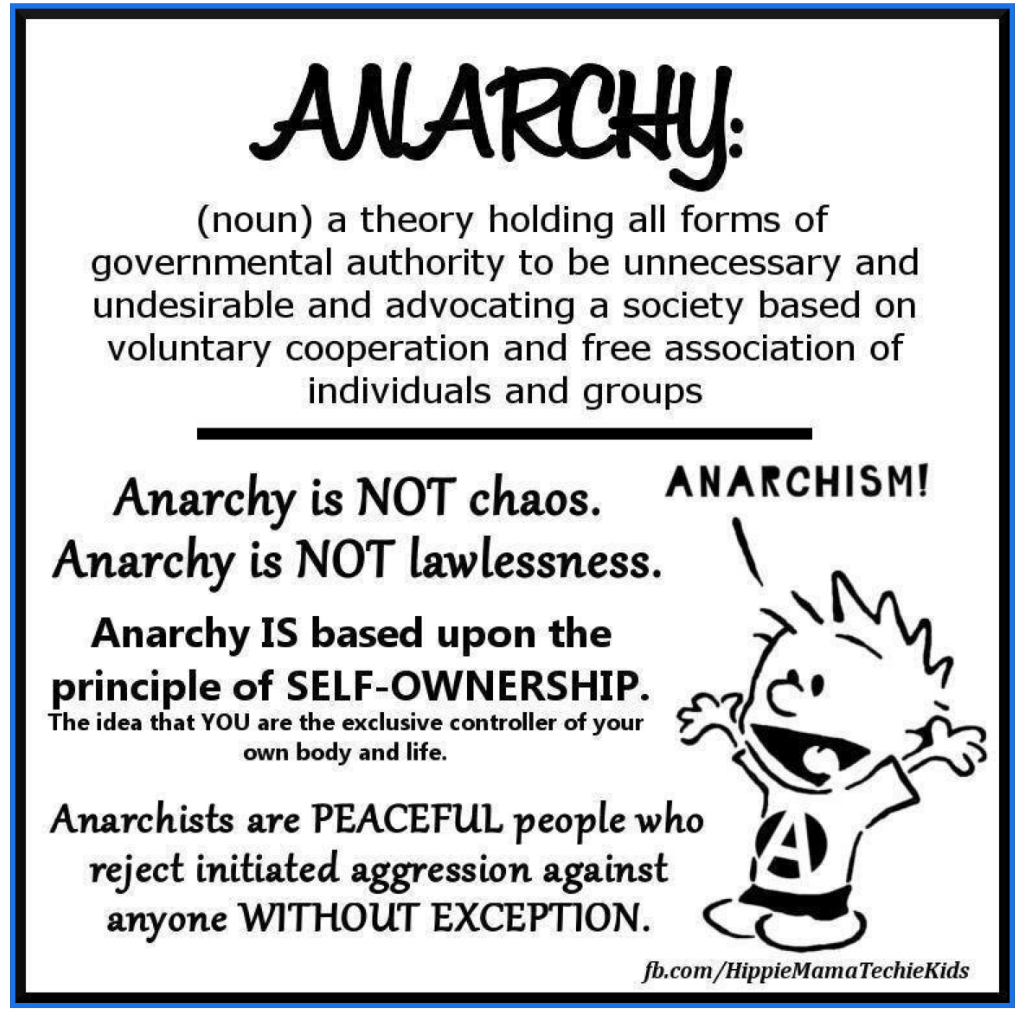
Just as egocentric individuals tend to center the defining characteristics that distinguish them from others, an egocentric culture tends to emphasize social distinctions and the hierarchies that define their relative value. This lends itself to authoritarian political leanings, whether they be left-wing or right-wing in orientation. Consider the MAGA movement in the United States and its outright embrace of a wannabe autocrat, protecting its own cherished freedoms under the “Don’t Tread on Me” banner while pushing for the expansion of the police state and religiocentric laws for everyone else, while the other side of the aisle makes bank on defending a neoliberal “democracy” run by corporate interests and technocrats. Even the so-called “libertarians” in America seem to skew more anti-government than anti-authority, rejecting the most benign functions of the former while turning a blind eye to the excesses of private corporate interests. ALL of these cultural trends find their genesis in an unchallenged conflation of the individual ego and natural self, passed memetically between generations and reinforced by countless norms and values.
If the authoritarian worldview of the ego is the antithesis of liberation, what is the true middle way forward? We’ll look closer at that in the next installment.
Originally published in the Noesta Aqui newsletter edition #24, 16 June 2024. Sign up for the mailing list here.
 Noesta Aqui